

Beyond the Signal Bars: Mobile Gaming After 5G and Wi-Fi 7
On a humid evening in Dhaka, Lagos, or São Paulo, the scene is strikingly similar: a mid-range phone, a cheap pair of earbuds, and a connection fast enough to summon entire worlds. Fifth-generation mobile networks have shifted from promise to reality, with 5G offering dramatically higher bandwidth and far lower latency than 4G, in some cases dipping into the 1-10 millisecond range instead of the 20-50 millisecond range typical of the previous generation. These gains, paired with the first mass-market Wi-Fi 7 routers in homes and cafés, mean that high-definition mobile games no longer feel like watered-down cousins of their console equivalents.
For millions of players, those worlds range from battle royale shooters and story-driven RPGs to puzzle apps and mobile casino platforms that spin up inside a browser tab. In each case, the network has become part of the game design itself: developers build for a reality where lag spikes are rare, downloads are quick, and a 90-minute commute can contain a full competitive session.
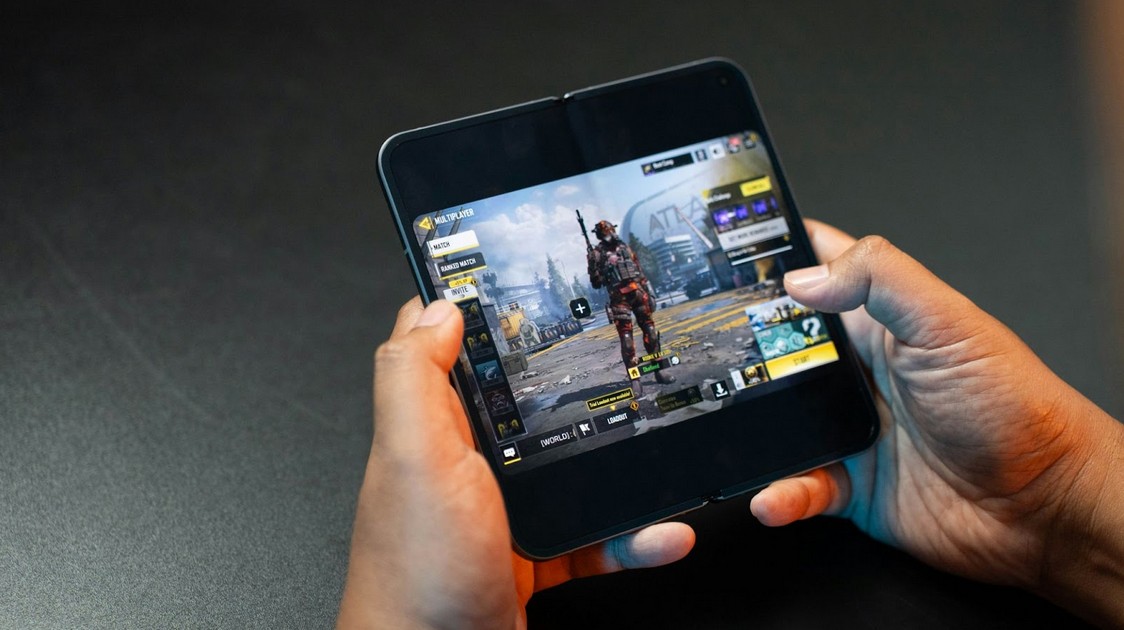
What Wi-Fi 7 Really Changes
Wi-Fi 7, formally known as IEEE 802.11be Extremely High Throughput, is designed for this new normal. It supports channel bandwidths up to 320 MHz in the 6 GHz band, double that of Wi-Fi 6. It uses techniques such as 4096-QAM modulation and Multi-Link Operation to deliver tens of gigabits per second of throughput while reducing latency. In theory, it’s more than four times faster than Wi-Fi 6, though real-world performance is lower.
For mobile gaming, the critical change is not just raw speed but stability under load. Multi-Link Operation allows devices to send and receive data simultaneously across the 2.4, 5, and 6 GHz bands, reducing congestion when many users share the same access point. In a crowded apartment block where one room is streaming a 4K film, and another is hosting a PUBG Mobile squad, that reliability can matter more than headline bandwidth.
After 5G: Edge Clouds and Invisible Hardware
If 5G provided the pipes, edge computing is quietly moving the servers closer to the player. Instead of routing every input through distant data centres, telecom operators and cloud providers are placing small clusters in regional hubs and even at the base of cellular towers. This reduces the physical distance that game data must travel, shaving precious milliseconds off the round-trip time and making streamed experiences feel more like local play.
Cloud-gaming platforms exploit this shift. Services such as Xbox Cloud Gaming and NVIDIA GeForce Now already let users stream AAA titles to Android and iOS devices, with the heavy rendering done on remote GPUs. GeForce Now’s premium tiers, for example, advertise up to 4K resolution and 240 frames per second from RTX-powered servers, while recent upgrades toward RTX 5080 hardware push up to 5K at 120 fps and 1440p at 240 fps. Xbox Cloud Gaming streams hundreds of console titles to phones, tablets, and smart TVs, requiring nothing beyond an app or browser. The next step is obvious: place more compute at the edge, so a budget handset can perform like a high-end PC as long as the connection holds.
Silicon That Thinks About Games First
Network upgrades would be of little value without chips that can leverage them. On the device side, mobile processors now arrive with gaming as a headline feature. Apple’s A17 Pro system-on-a-chip, used in devices such as the 2024 iPad mini, brings hardware-accelerated ray tracing and mesh shading to a handheld form factor, enabling demanding titles like Zenless Zone Zero to run with lighting effects once reserved for desktop GPUs. MediaTek’s Dimensity 9500, built on a 3 nm process, combines a powerful CPU cluster with a Mali G1-Ultra GPU capable of real-time ray tracing at up to 120 frames per second, targeting flagship Android phones for serious players.
Qualcomm also positions its Snapdragon 8-series platforms as gaming engines. The new Snapdragon 8 Elite Gen 5 powers flagships like the OnePlus 15. At the same time, the more affordable Snapdragon 8 Gen 5 is set to debut in the OnePlus 15R, delivering significant gains in CPU, GPU, and AI performance over earlier generations. In practical terms, this means that future mobile games can assume not just fast networks but also chips that support advanced upscaling, physics, and AI-driven characters directly on the handset.
New Genres for a Borderless Network
Once latency and bandwidth thresholds are crossed, designers can experiment with genres that were awkward on earlier phones. Persistent shared worlds are easier to manage when both radio and Wi-Fi links support low-jitter connections. Edge-assisted augmented-reality games can anchor virtual objects to street corners without the drift that plagued early experiments. Competitive cloud-streamed fighters and racers, once mocked for input lag, are becoming viable as 5G and Wi-Fi 7 keep round-trip times in the tens rather than hundreds of milliseconds.
Cross-platform play also gains from this foundation. Commentaries on 5G and gaming now routinely describe lobbies where consoles, PCs, VR headsets, and smartphones all connect to the same edge-hosted session, with synchronisation handled by a mesh of nearby servers rather than a single distant authority. The device in your hand matters less than the identity you carry across these spaces.
Power and Responsibility
What follows 5G and Wi-Fi 7 is not simply “6G” or another line on a router spec sheet, but a gradual blurring of boundaries. Processing slips from the phone into the network and back again; AI systems suggest what to play, tune difficulty curves, and quietly watch for cheating. In regulated markets, some betting and gaming operators already use analytics engines to identify unhealthy patterns and shape offers that feel both personalised and safe. In those jurisdictions, the melbet app is typically presented as a mobile-first front end to a broader sportsbook and casino ecosystem, with live odds, in-play stats, and responsible-gaming options bundled into a single interface.
As networks and silicon continue to sharpen, mobile games will have the technical capacity to be almost anything: cinema, sport, social network, and classroom. The real frontier is cultural rather than electrical. Designers, regulators, and players will have to decide how much data they are willing to trade for low-latency wonder; how much automation they accept in matchmaking and reward systems; how far they want to lean into worlds that never entirely switch off. After 5G and Wi-Fi 7, the smallest part of the future of mobile gaming may be the signal bars themselves.